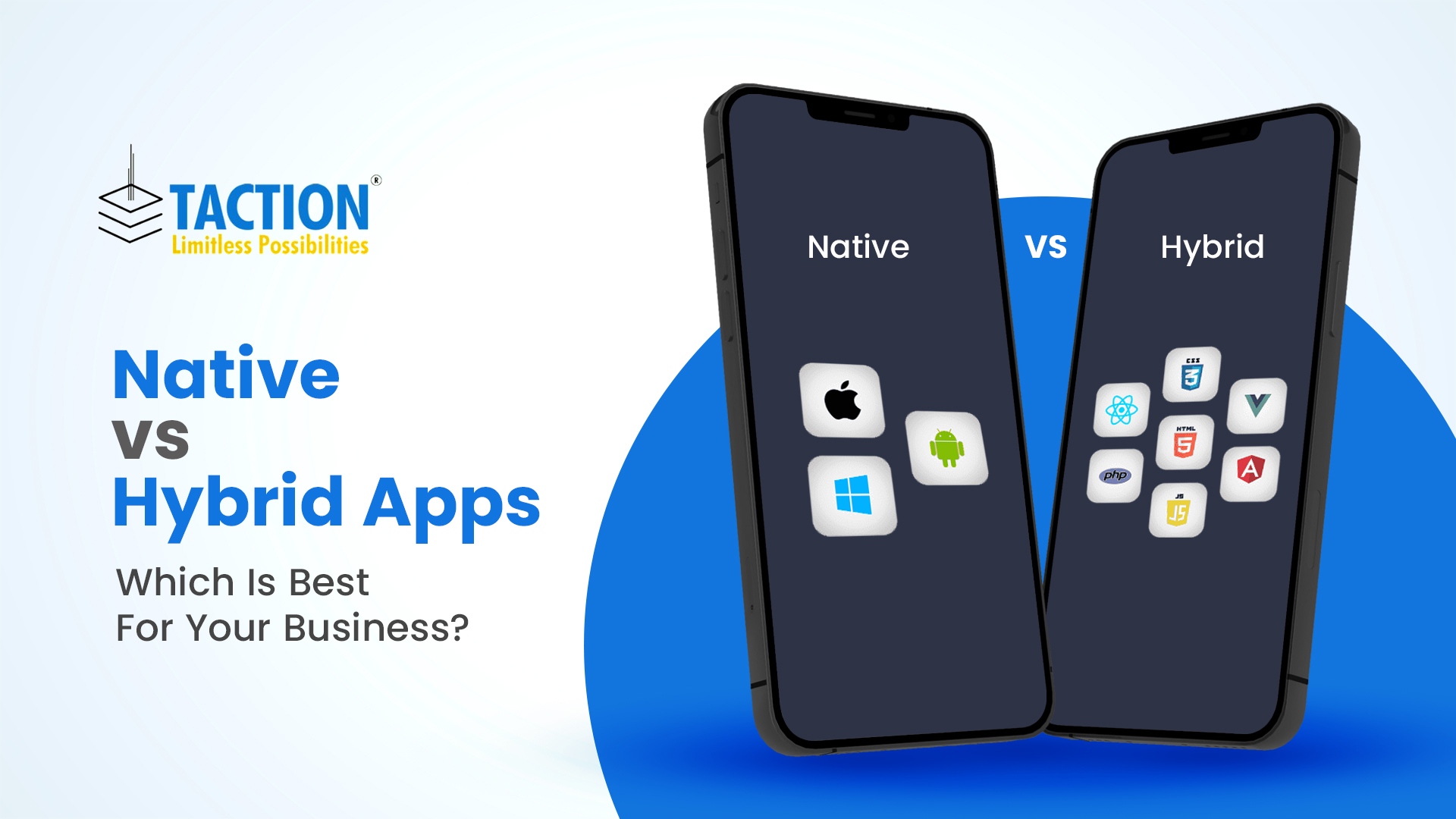
Native vs Hybrid Apps: Which Is Best for Your Business?
Mobile apps are no longer just digital add-ons. Today, they are often the primary touchpoint between a business and its users. Whether you’re launching a startup product, modernizing enterprise systems, or scaling an existing platform, one decision will shape everything that follows: Native vs Hybrid Apps.
At Taction Software, we regularly guide clients through this decision during Mobile App Development consultations. And while the internet is full of “one-size-fits-all” answers, the truth is more nuanced. The right approach depends on your business goals, performance expectations, timeline, and budget.
Let’s explore this in a practical, business-first way.
What Native App Development Really Means Today
Native App Development involves building apps specifically for a single platform—iOS App Development using Swift iOS development, and Android App Development using Kotlin Android development or Java Android development.
These are often referred to as Native Mobile Apps, and they offer deep integration with platform-specific features and device hardware.
Why Businesses Still Choose Native Mobile Apps
Native apps remain the preferred choice for:
- High-performance user experiences
- Complex workflows
- Platform-specific app development
- Advanced animations and UI responsiveness
- Secure access to device-level features
In industries like fintech, healthcare, logistics, or IoT, app performance optimization plays a critical role. Native apps handle mobile app APIs, background processes, and system-level tasks with greater efficiency.
From our experience at Taction Software, businesses building core digital products—not just supporting apps—often benefit from native development in the long run.
The Cost & Resource Reality
Native apps require:
- Separate codebases for iOS and Android
- Specialized development teams
- Longer development cycles
- Higher mobile app development cost
This makes native development powerful—but not always practical for early-stage products.
Cross-Platform & Hybrid Apps: A Business-Friendly Alternative
Cross-platform app development allows developers to build apps using a single codebase that runs across platforms. Popular app development frameworks include:
- Flutter app development using the Dart programming language
- React Native app development
- Xamarin framework
These solutions are commonly referred to as cross-platform mobile apps and have matured significantly.
Why Cross-Platform App Development Makes Sense
Cross-platform apps are well-suited for:
- Faster development and launch timelines
- Controlled budgets
- Consistent user experience across devices
- Easier updates and long-term maintenance
For many business applications—such as booking platforms, dashboards, e-commerce apps, or internal tools—the performance gap between native and cross-platform apps is minimal.
We’ve seen clients successfully validate ideas using React Native or Flutter, launch faster, and scale confidently without overinvesting early.
Where Cross-Platform Still Has Limits
Cross-platform apps may face challenges when:
- Applications require heavy graphics or real-time rendering
- Platform-specific features are deeply customized
- Hardware-level performance is mission-critical
In such cases, the native app vs cross-platform app decision becomes crucial.
Native vs Cross-Platform Apps: A Business Comparison
Rather than focusing on trends, here’s how native vs cross-platform apps compare from a business perspective:
Development Speed
Cross-platform development enables quicker delivery by using shared app development tools.
Performance & User Experience
Native apps continue to offer superior responsiveness, especially for performance-intensive applications.
Cost Efficiency
Cross-platform development significantly reduces mobile application development costs, particularly for startups and growing businesses.
Scalability
Both approaches scale effectively, though native apps offer more control for complex and evolving systems.
Maintenance
Cross-platform apps are easier to maintain, while native apps require parallel updates across platforms.
Choosing the Right App Development Platforms
When selecting between native app development and cross-platform app development, businesses often overlook long-term evolution.
Consider questions like:
- Will this app remain simple or grow into a complex ecosystem?
- Is performance a competitive advantage?
- Are you optimizing for speed now or depth later?
Content-driven platforms and service apps often perform well as cross-platform mobile apps, while product-centric platforms benefit from platform-specific app development.
At Taction Software, we frequently recommend a hybrid-first approach for MVPs, followed by native enhancements once real user data is available.
The Role of App Development Frameworks & Tools
Modern app development platforms offer flexibility and scalability when chosen wisely.
- Flutter app development supports rich UI and consistent performance
- React Native app development enables faster iterations
- Native solutions using Swift, Kotlin, or Java deliver deeper platform control
Selecting the right app development frameworks should always align with your product roadmap.
Final Thoughts: Native vs Hybrid Apps
There is no universal answer in the native vs hybrid apps debate.
- Native mobile apps are ideal when performance, security, and deep integration matter most.
- Cross-platform mobile apps are better suited for faster launches and controlled budgets.
The right choice comes from understanding your business—not chasing trends.
Why Businesses Choose Taction Software
At Taction Software, we help companies make informed decisions across iOS app development, Android app development, and cross-platform app development.
If you’re planning a mobile product and want clarity on native vs hybrid apps, our team is ready to guide you—strategically and practically.
Because the best apps aren’t built by chance.
They’re built with purpose.